

What Career Opportunities Are Available After Learning Sound Engineering
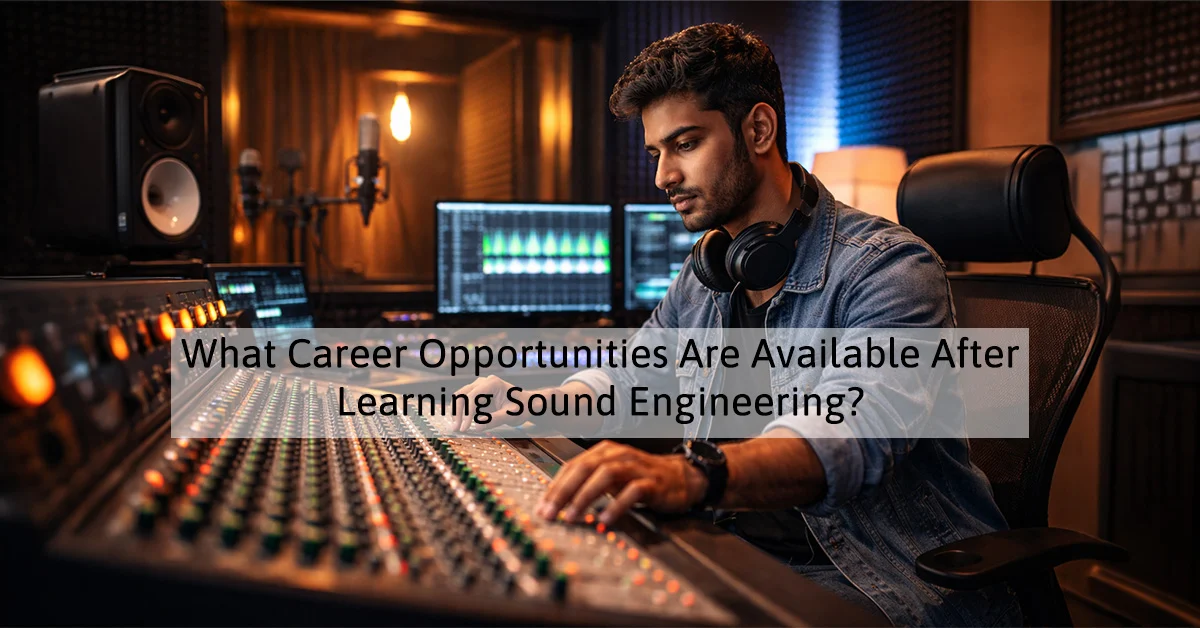

Sound is at the heart of every experience, whether it is a film that moves you, a concert that stays with you, or an album you keep returning to. Behind all of it, there is a sound engineer making decisions most listeners never think about. The audio industry in India is growing steadily, pushed forward by streaming platforms, regional cinema, live events, and a content economy that shows no signs of slowing down. If you are exploring music production courses in India, knowing where your skills can take you matters just as much as the training itself.
In this blog, we will take a closer look at the major career paths, freelance options, and salary potential that open up after learning sound engineering.
Major Career Paths in Sound Engineering
Sound engineering is not one job. It is a broad field with several distinct roles, and each one draws from a different mix of technical knowledge and creative thinking.
Studio recording is where many people begin. A recording engineer handles microphone placement, signal routing, and the overall flow of a session. Part of the job is technical. Part of it is making sure the artist is comfortable enough to perform well, and the best engineers understand both equally.
Mixing is where everything recorded finally starts to make sense. A mixing engineer takes every individual track and works through the levels, the frequencies, and the space between each element until the song sounds and feels like one complete thing. Listeners never notice the work, but they always feel it.
Mastering is the final step. It makes sure the track sounds solid whether someone is listening through cheap earphones or a professional speaker setup. It ensures a track translates well whether it plays through earphones or a large speaker system. It is detailed, specialized work, and engineers who do it well are always in demand.
Film and television audio is one of the most active areas in the industry right now. Indian cinema across multiple languages runs year-round, and every production needs trained professionals for dialogue editing, Foley, ADR, and full audio mixing. The work is demanding and creatively satisfying in equal measure.
Live sound suits people who work well under pressure. Managing audio in real time at concerts, events, and theatre productions leaves no room for error, and the engineers who handle it well build reputations that carry them far.
Freelance Career Options
A large number of sound engineers in India today work independently and the industry supports that choice. Freelancing opens up work across music production, film, podcasting and advertising at the same time, which builds a stronger and more varied portfolio than staying in a single role.
Podcast production has become a genuine income stream. Brands, educators and media companies regularly look for engineers who can record, edit, and master spoken audio professionally. Advertising is another consistent source of work, with demand for jingle production, voice over sessions, and short-form audio content.
A few habits that help freelancers grow:
- Building connections during training, not after it
- Treating every small project with the same care as a large one
- Staying current with production tools and formats as they evolve
Reputation builds slowly and matters enormously in this field.
Salary and Career Growth
Entry-level sound engineers in India typically earn between Rs. 15,000 and Rs. 30,000 per month. With two to three years of real experience that figure moves up noticeably. Senior engineers working in film or with established artists can earn Rs. 60,000 to Rs. 80,000 or more per month. Experienced freelancers with a solid portfolio often go beyond those numbers depending on the projects they take on.
Growth here follows effort. Engineers who keep learning and take on varied work tend to build careers that hold up over time.
The training you go through shapes everything that follows. Practical, studio-based learning given by experts like our Tase as the best Sound Engineering Colleges prepares you for real industry conditions in a way that theory alone cannot. If you are considering music production courses in Chennai, choosing a program that pairs solid technical education with the actual demands of the Indian audio industry is one of the smartest early decisions you can make. The field is creative, the opportunities are real, and for those who invest in their craft, the career is one that genuinely lasts.