

The Rise of Immersive Audio and Its Impact on Modern Music
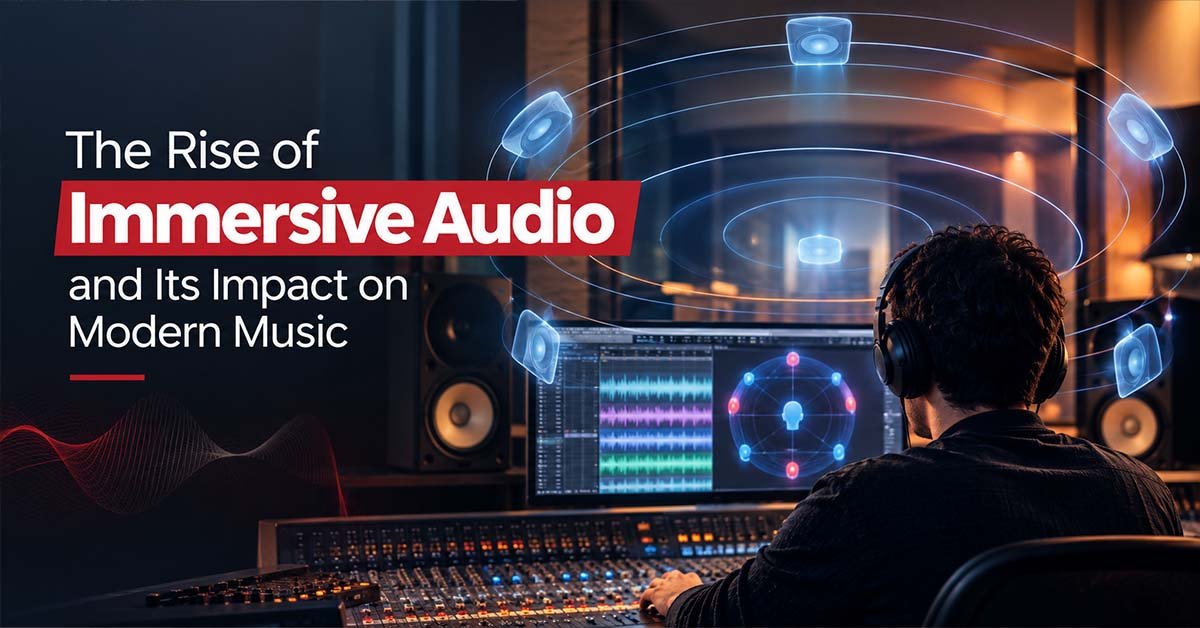

Put on a pair of headphones, press play on a song you have heard a hundred times, and then switch to its spatial version. The drums sit slightly behind you, the vocal floats in front and a guitar line drifts over your left shoulder. Same song, completely different experience. Immersive audio has moved from cinemas into earbuds, phones and streaming apps, and it is quietly changing how artists, producers and listeners think about a mix.
This article explains what immersive audio is, how it differs from stereo, the formats behind it, what it changes in the studio, how listeners hear it, where it still struggles and what skills a new producer should build. If you are weighing music production courses In India, it will show you why this topic now matters.
From Mono to Space: A Short Road to Immersion
Recorded music has always chased a sense of place. Early records were mono, a single channel of sound. Stereo, which arrived in the late 1950s, added a left and right image and let producers pan instruments across a line. Surround sound followed in cinemas and home theatres, with speakers placed around the viewer.
Immersive audio takes the next step. Instead of positioning sound on a flat line or a ring, it places it in three dimensions, including above the listener. Sounds can sit high, low, near or far, and they can move.
What Immersive Audio Actually Means
The phrase covers a few related ideas, and they are often mixed up.
- Channel-based audio: Sound is assigned to fixed speakers, such as a 5.1 or 7.1 layout
- Object-based audio: Each sound is stored as an object with a position in space, and the playback system decides how to render it for whatever speakers or headphones are present
- Binaural rendering: A technique that uses head-related filters to create a three-dimensional impression through ordinary headphones
- Spatial audio: The consumer-friendly name for these experiences on phones and streaming services
The object-based approach is the real shift. A mix is no longer locked to one speaker layout, so the same file can adapt to a cinema, a soundbar or a pair of earbuds.
The Formats Shaping the Industry
Several formats compete, and producers often deliver for more than one.
- Dolby Atmos: The most widely supported, now common on major streaming services and in studios
- Sony 360 Reality Audio: Object-based and aimed at music, with its own supported services
- Ambisonics: A full-sphere format popular in VR, games and 360 video
- Apple’s spatial audio: Built on Atmos content and delivered with head tracking on supported devices
- DTS:X and Auro-3D: Used mainly in cinemas and home theatres
Atmos dominates the music side today, which is why many studios begin by learning its tools and delivery rules.
How It Changes Music Production
Working in three dimensions changes the way a mix is built. In stereo, instruments compete for the same space. In an immersive mix, they can be spread out, which often reduces the need for heavy equalisation. This opens up new creative moves too: backing vocals can surround the listener, a synth pad can rise overhead and an effect can travel through the room.
Priorities shift as well. A strong stereo mix still matters, because most people will hear the song in stereo first, so engineers check that both versions hold up. Digital audio workstations now include object panners, bed tracks and renderers, and mixers monitor with speaker arrays or binaural previews. Files must also meet technical delivery specifications, and a master is checked on several systems.
How Listeners Hear It
Most people will never own a speaker array, so headphones carry the format. Phones, earbuds and headphones with spatial features render object-based mixes binaurally, while soundbars with upward-firing drivers bounce sound off the ceiling to suggest height. Home theatres with ceiling speakers give the fullest effect, cars increasingly offer immersive systems tuned to the cabin, and live venues are adding multi-speaker setups for concerts and installations.
The result is that a single mix may be heard through very different systems. Engineers need to understand how the rendering changes what the audience actually hears.
Wider Effects on Artists, Labels and Platforms
Immersive audio is not only a technical choice. It touches the business as well. Streaming services highlight spatial tracks, which can improve visibility for releases, and catalogue music is being remixed for the format, giving older songs a second life. Artists use it as a point of difference in releases, videos and live shows, and film, games and VR need the same skills, so audio professionals can work across sectors. Independent producers can compete too, since the tools are now available at modest cost.
The caution is that technology does not rescue a weak song. A strong composition and performance still carry the most weight. Immersive audio simply gives a good song a larger stage.
Where It Still Struggles
The format is not without problems, and honest producers acknowledge them. Binaural rendering varies between people, since head and ear shapes differ, and some listeners find spatial mixes thin or distant compared with a punchy stereo version. Standards and delivery rules differ across platforms, and monitoring correctly requires a calibrated room or reliable headphone tools. Heavy processing can also make mixes sound unnatural when overdone.
These issues are being worked on, but they explain why many releases still go out in both stereo and spatial versions.
Skills a Producer Needs Now
Anyone entering the field benefits from a mix of fundamentals and new tools.
- Strong ear training and a solid grasp of stereo mixing
- Understanding of room acoustics and monitoring
- Comfort with at least one object-based workstation workflow
- Knowledge of loudness standards and delivery specifications
- Habits of testing mixes on headphones, speakers and phones
- Willingness to keep learning, since formats continue to evolve
Hands-on practice counts more than reading. Mixing real projects, with feedback from experienced engineers, is where the instincts form.
Learning the Craft in a Studio Environment
The Audio Sound Engineering academy, TASE, trains students in music production and sound engineering through diploma programmes taught in working studio settings. Its courses cover recording, mixing and mastering, with an emphasis on practical sessions on professional equipment.
Training in a studio matters for immersive work, since much of it depends on listening in a properly set up room and getting feedback on real mixes. Students who learn the fundamentals first and add spatial skills on top tend to adapt best as formats change.
Listening Ahead
Immersive audio will not replace stereo overnight, and it does not need to. What it offers is another tool, one that lets music feel larger and more physical when the song calls for it. Producers who understand both approaches will be ready for whatever listeners adopt next. For anyone ready to build that skill set in a larger music hub, look at sound engineering courses in Bangalore and see how a structured programme can take you from the basics to professional-level mixing.
Previous