

Turn Noise into Art: The Untold Power of Sound Engineering
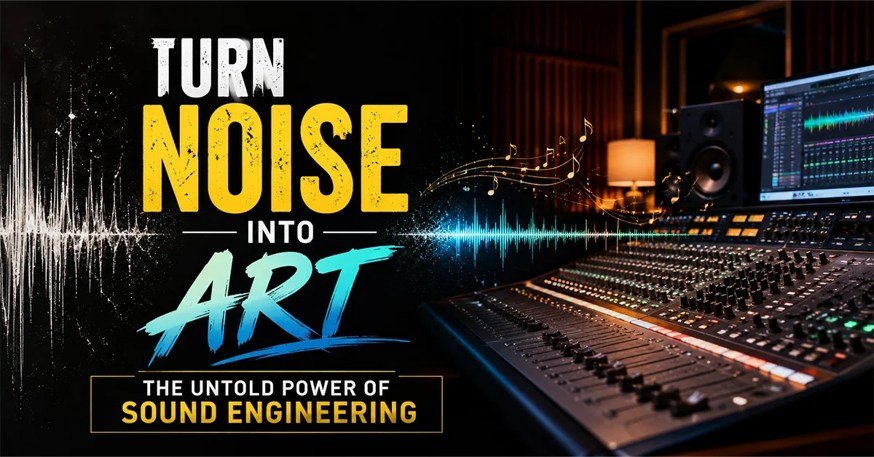

Sound is everywhere. It fills concert halls, bleeds through apartment walls, hums inside film scores, and sits quietly beneath a podcast you did not even realise was mixed. Most people hear it. Sound engineers listen to it differently. They hear layers, frequencies, problems, and possibilities all at once. For those seriously considering audio engineering courses in India, understanding what sound engineering actually does, beyond the surface, is the first real step.
There is a lot more happening in that studio than what meets the eye. It is a discipline where science and creative instinct meet and where the difference between good and great audio comes down to decisions most listeners will never consciously notice. In this blog, we will take a closer look at what sound engineering truly involves, why it matters more than most people realise, and what it takes to build a career around it.
What Sound Engineering Actually Is
Strip away the romanticised image of a producer sitting behind a massive console, and what you are left with is still genuinely impressive. Sound engineering is the process of capturing, shaping, and delivering audio with intention. Every sound source behaves differently. A vocal recorded in a tiled bathroom sounds nothing like one captured in an acoustically treated room. Managing those differences, and making deliberate choices about them, is the job.
The field spans several distinct environments:
- Live sound, where engineers mix performances in real time with no room for error
- Studio recording, where patience and precision define the quality of everything captured
- Post-production, covering audio for film, television and digital content
- Broadcast, where consistency across every output is non-negotiable
Each environment demands its own skill set. The underlying language, however, stays the same.
The Three Pillars: Editing, Mixing and Mastering
Once audio is recorded, the real work begins. The post-production chain has three stages, and each one is a craft on its own.
Editing is where the raw material gets sorted. Most recordings involve multiple takes and not every take is perfect from start to finish. An engineer listens through all of it, picks the moments that work best and puts them together in a way that sounds like it was always meant to flow that way
Mixing is where the emotional weight of a track gets shaped. A good mix does not simply balance levels. It builds a sense of space, guides the listener’s attention, and serves the feeling that a piece of music or dialogue is meant to carry. Frequency shaping, dynamic control, spatial placement, all of it works together. The process is deeply technical, but the outcome is always creative.
Mastering is the final step before a recording reaches its audience. It ensures consistency across an album or project, prepares the audio for different playback systems and brings everything to a release ready standard. When mastering is done well, you do not notice it. When it is done poorly, you feel something is off even if you cannot name it.
Why Technical Skill Alone Is Not Enough
There is a common misunderstanding in audio that knowing the tools is the same as knowing the craft. It is not. Software changes. Hardware gets updated. What stays constant is the ability to listen critically, communicate clearly with artists and directors, and make decisions that serve the work rather than personal preference.
Experienced sound engineers develop what could be called a sonic instinct. They understand how microphone placement changes the character of a sound. They know when a room is helping a recording and when it is working against it. They can sense what a mix needs before they reach for a single plugin. That kind of awareness does not come from watching tutorials alone. It comes from hours inside a real studio, working on real material and learning from people who have already made every mistake worth making.
Sound Engineering as a Career in India
India’s entertainment and media industry has grown substantially over the past decade. Film, streaming platforms, live events, gaming audio, and branded content have all expanded, and each one needs skilled audio professionals to function. The roles available to a trained sound engineer are wider than most people expect: studio engineer, dialogue editor, re-recording mixer, location sound recordist, broadcast engineer, music editor, and more.
The financial side is worth noting too. Globally, sound engineers earn well above entry-level creative roles, and in India, the pace of industry growth is creating a noticeable gap between available work and available talent. That gap is an opportunity for anyone who trains seriously and enters the field prepared.
Sound engineering is not a background profession. It is the reason a film feels the way it does, a record connects the way it does, and a live performance hits with the impact it does. The work is demanding, precise, creative, and genuinely rewarding for those who put in the effort to understand it at a deeper level.
At TASE, we did not build our programs around what looked good on paper. We built them around what actually works in the real world. Our music production courses in India are not built around classrooms and theory sheets. They are built around real studio environments, professional-grade equipment, and workflows that reflect what the industry actually looks like. We are India’s only audio engineering school with a fully international curriculum, and every program we offer is designed to take students from curious to career-ready. Whether your interest is in recording, mixing, live sound, or film audio, TASE gives you the practical foundation to walk into this industry and do the work with confidence. Your career in sound starts here.