

The Evolution of Music Production in India: From Tape to DAWs
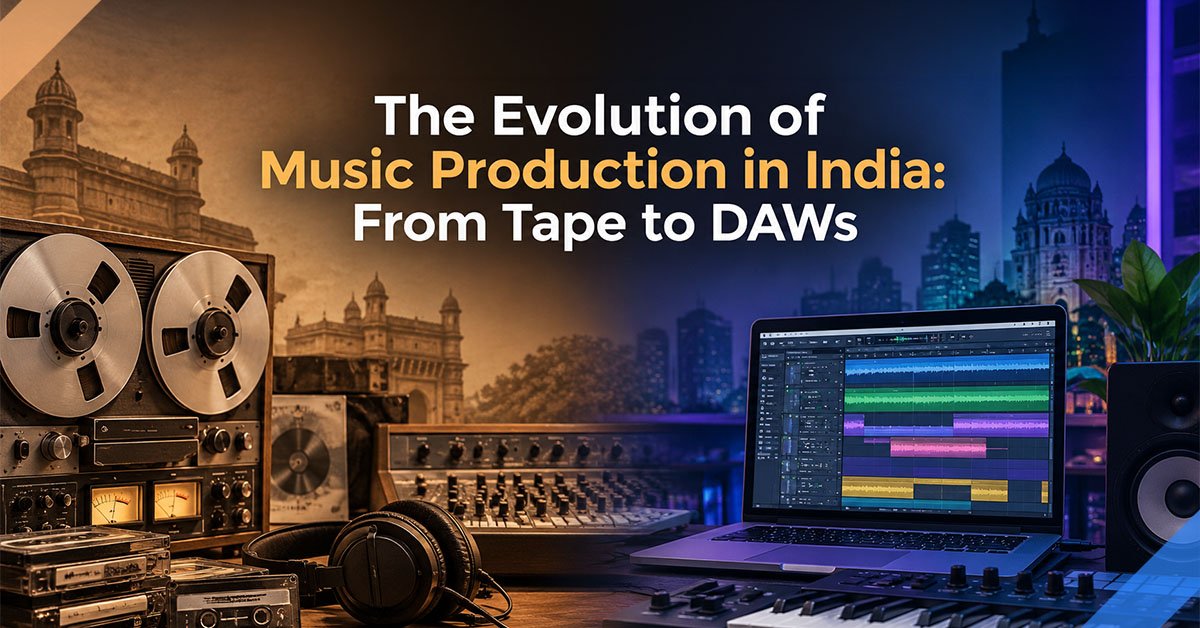

Step into most recording spaces in India today and you’ll see a laptop, a pair of monitors, maybe a MIDI controller. That’s it. Compare that to a Bollywood studio from the eighties, packed with reel-to-reel machines and cables running everywhere, and the contrast is almost unbelievable. Indian music production has traveled a long road to get here, shaped as much by economics and shifting culture as by the technology itself. Sound engineering India didn’t just adopt new tools, it had to rethink how music gets made from the ground up. In this blog, we will take a closer look at how that journey unfolded and what it actually means for anyone working in audio today.
The Tape Era Wasn’t Romantic, It Was Hard
People sometimes look back at the tape era with a kind of nostalgia, but working with tape was genuinely tough. There was no undo. If a take went wrong, you rewound, spliced, or simply did it again, and every minute of tape cost money. Studios in Mumbai, Chennai, and Kolkata ran on tight budgets, so sessions demanded real preparation before anyone hit record.
That pressure built engineers who actually understood their craft, not just their software. R.D. Burman’s sessions are a good example. Full orchestras recorded live, mostly in one pass, with almost no room to patch things up afterward. Compare that to how much gets fixed after the fact now, and you start to see what got lost along the way, even as so much else improved.
Then Things Started Shifting, Slowly at First
Change crept in during the nineties rather than arriving all at once. MIDI sequencing and early samplers showed up in Indian studios, usually imported and priced well beyond what most engineers could afford on their own. Still, they cracked the door open. Producers could now build layers, program rhythms, try things out without burning tape on every idea.
Then, in the early 2000s, software like Cubase and Pro Tools started taking over from physical tape decks. This went beyond a simple upgrade in gear. It reshaped how studios were run financially, since digital systems needed far less space, less upkeep, and a lot less money than maintaining analog tape machines. Suddenly a small studio in a smaller city could compete with the big names in Mumbai, and that changed who got a shot at making music professionally.
DAWs Handed the Studio to Anyone Who Wanted It
This is really where things opened up. Ableton Live, FL Studio, Logic Pro, these brought studio-level tools to a laptop screen. You didn’t need to book expensive studio hours anymore just to lay down a full track. In a country where professional facilities were mostly clustered in a handful of cities, that mattered a lot more than it might sound.
A few things pushed this along faster than anyone expected:
- Cheaper audio interfaces made home recording actually workable, not just theoretical
- Online tutorials and forums took over the role apprenticeships used to play
- Cloud tools let artists collaborate with producers in other cities without ever meeting in person
What came out of this is a whole generation of independent musicians releasing finished, polished tracks without setting foot in a commercial studio. Streaming gave them a direct line to listeners too, cutting out a lot of the old label-driven production pipeline in the process.
Some Things Never Actually Changed
Here’s the thing though. All this new gear hasn’t changed what actually makes a track sound good. Frequency balance, dynamics, how instruments sit next to each other in a mix, that’s still what separates something polished from something amateur. Software can nudge a pitch or snap timing into place, but it can’t hand you an ear that recognizes when a mix is genuinely working.
This is exactly why formal training still matters, even now, in an era where anyone can download a DAW for free. Self-taught producers often plateau because nobody’s giving them honest feedback on their work. Learning acoustics, signal chains, mastering, none of that comes from watching a few YouTube videos. It takes guided practice over time, and that’s still something structured education does better than trial and error.
Where Things Stand Right Now
India’s production world today is an odd blend of old habits and new tools. Some studios still reach for analog gear, especially for film scoring, because of the warmth it brings. Meanwhile plenty of independent artists mix entire albums on a consumer laptop in their bedroom. Genres have splintered too. Indie pop, lo-fi hip hop, regional fusion, these all have real audiences now that simply didn’t exist ten years back, and a lot of that music comes out of home setups rather than traditional studios.
If anything, this variety has made real technical skill worth more, not less. When everyone has access to the same software, the people who actually understand what they’re doing, beyond just clicking through a plugin menu, are the ones whose work rises above the noise.
At Tase, we’ve watched this shift play out firsthand, working with students who’ve never known a world where tape was the only option. What we keep coming back to is this: the tools will keep changing, but the need for solid technical grounding never really goes away. If you’re serious about a career in audio, it helps to understand both where this industry came from and where it’s heading, and that’s the thinking behind how we’ve built our music production courses in India. We focus less on teaching software shortcuts and more on training the ear, because that’s the one skill that stays useful no matter which DAW happens to be popular next year.
Frequently Asked Questions
Is analog recording still relevant in today’s digital music industry?
Yes, especially in film scoring and certain genres where that warmth matters.
A lot of professional studios use analog gear alongside digital tools rather
than picking one over the other entirely.
Do I need expensive equipment to start producing music at home?
Not really. A decent audio interface, a solid pair of headphones or monitors
and a reliable laptop cover the basics. Learning to actually use those tools
well matters far more than the price tag on them.
Can I become a professional sound engineer without formal training?
It happens, but it’s rare. Self-taught producers often hit a wall with
fundamentals like acoustics and signal flow. Structured training tends to
close those gaps a lot faster than years of guessing.
What skills matter most for someone starting out in music production today?
A trained ear for mixing and mastering counts for more than knowing every
button in a DAW. Software changes every couple of years. The ability to
actually hear what’s wrong with a mix doesn’t.
How has streaming changed music production in India?
It gave independent artists a direct route to listeners without needing a
label deal or a huge studio budget behind them, which is a big part of why
home production and DIY workflows became so common.