

Studio Monitors vs Headphones: What’s Better for Mixing?
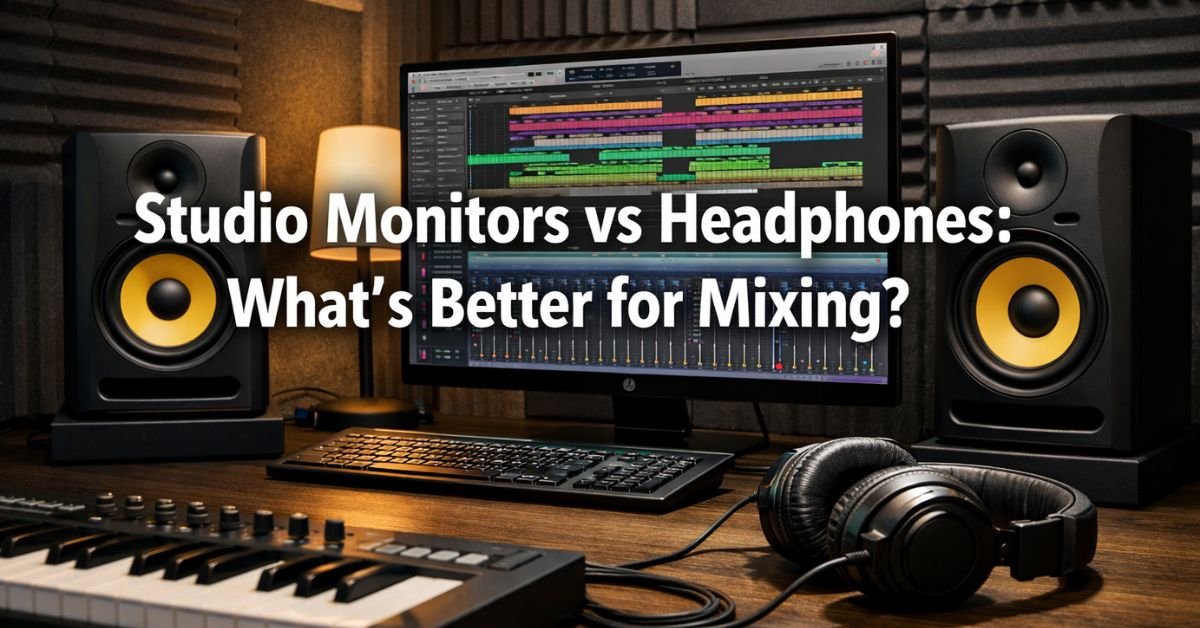

Every producer hits this question at some point. You have a track that sounds great on your headphones, but the moment you play it on speakers, something feels off. The low end is too heavy, or the vocals sit too far back. This is one of the most common problems in home production, and it usually comes down to the tool you are mixing on. If you are enrolled in music production courses in Bangalore or just starting out independently, understanding the difference between studio monitors and headphones is fundamental to getting your mixes right. In this blog, we will take a closer look at how each tool works, where each one falls short, and what actually makes sense for your setup.
How Studio Monitors Work
Studio monitors are built for accuracy, not enjoyment. Regular speakers are designed to make audio sound good by boosting bass or adding brightness. Monitors do the opposite. They give you an honest picture of what is actually in your mix, nothing added, nothing smoothed over. What you hear is as close to the original signal as it gets. This matters because a mix that sounds balanced on monitors tends to translate well across different playback systems, whether that is a car stereo, a phone speaker, or a club sound system. The room you work in affects how monitors perform, so treatment and placement both play a role in what you actually hear.
How Headphones Fit Into the Picture
Headphones give you a detailed, isolated listening environment. They are useful for catching small details, editing quietly, and working late without disturbing anyone. Open back headphones, in particular, offer a wider soundstage that feels closer to listening on speakers. Closed back headphones are better for tracking and recording since they block outside noise. The limitation with headphones is that stereo imaging works differently when sound is coming from inside your ears rather than from a room. Mixes done entirely on headphones can sometimes feel narrow or disconnected when played back on speakers.
Where Each One Falls Short
Neither tool is perfect on its own. Here is where each one tends to let you down:
- Studio monitors are sensitive to room acoustics. A poorly treated space can colour your mix just as much as bad gear
- Headphones can exaggerate stereo width and make it harder to judge how a mix will sit in a real listening environment
- Both require time and familiarity before your ears learn to make accurate decisions through them
The more time you spend with a specific tool, the better you get at compensating for its weaknesses.
Which One Should You Use
The honest answer is both. Most professional engineers check their mixes on multiple systems before calling something done. They might build the mix on monitors, then check it on headphones, then listen in a car or on earbuds. Each playback system reveals something different. During music production training, students are taught to reference their work across multiple sources rather than relying on a single output. This habit alone improves mix quality significantly over time.
What Beginners Should Prioritise
If you are just starting out and cannot invest in both right away, a reliable pair of open back headphones is a practical first step. They are more affordable, do not require room treatment, and still give you enough accuracy to build real skills. As your workflow develops and you start working on real studio projects, adding a pair of entry level monitors makes a noticeable difference.
The monitors versus headphones debate does not have a single winner. Both serve a purpose, and knowing when to use each one is part of becoming a well rounded producer. If you are serious about building that kind of knowledge, music production courses in Chennai at TASE give you hands on experience with professional grade tools and the training to use them with confidence.
Previous