

Why Sound Engineers Are Essential to Successful Video Production
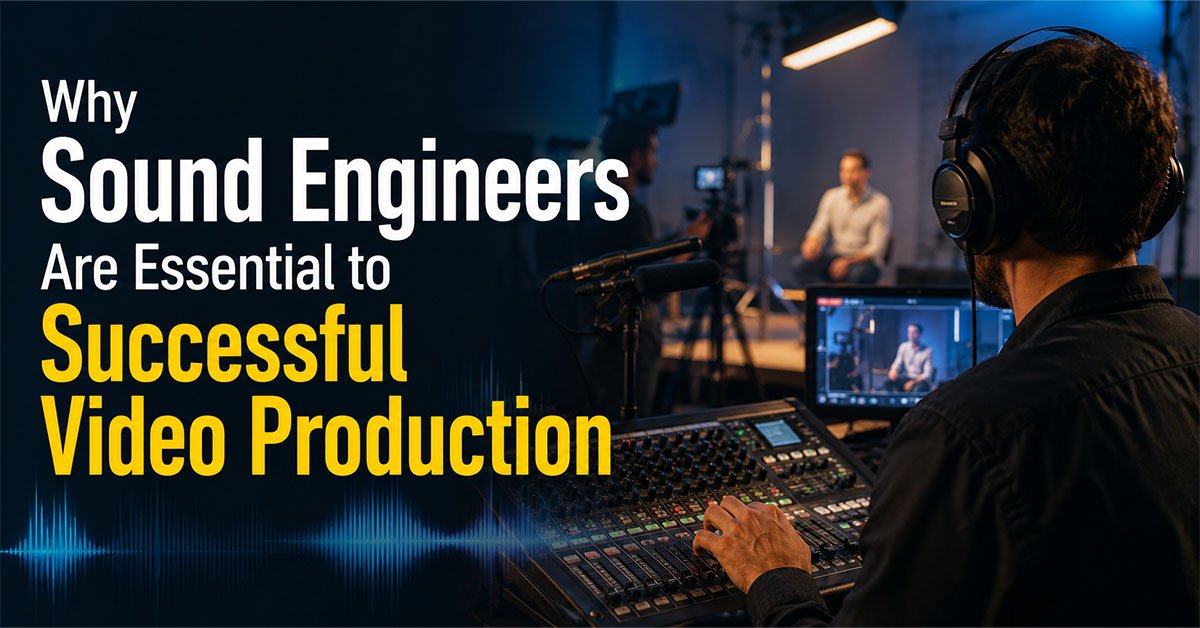

Watch any video with the sound turned off and something feels missing immediately, even if the visuals are stunning. Now watch that same video with muddy dialogue, harsh background noise, or music that overpowers the actors talking. Most viewers will not know exactly what went wrong, but they will feel it, and they will likely stop watching.
This is exactly why sound engineers matter so much in video production, and why more people are taking proper sound engineering courses In India before stepping into this field. Good audio is not a finishing touch added at the end. It is a core part of whether a video actually works.
Why Video Cannot Succeed on Visuals Alone
People assume video production is mostly about cameras, lighting, and editing footage together. In reality, audio carries an enormous amount of the emotional weight in any video, often more than the visuals themselves. A tense scene falls flat without the right sound design. A joyful moment feels hollow without music that supports it properly.
Studies and industry experience both point to the same thing, poor audio quality drives viewers away faster than average video quality does. People will forgive a slightly shaky shot far more easily than they will forgive audio that is hard to understand or unpleasant to listen to.
What a Sound Engineer Actually Does on a Production
A sound engineer’s job goes well beyond just pressing record. On a film or video set, they are responsible for capturing clean dialogue, music, and effects, often working with specialised equipment like boom microphones and lavalier mics to get usable audio directly from the location.
Once filming wraps, the real technical work begins. Normally this breaks down into three main functions. Editing is the process of selecting the best takes and putting them together to create a seamless performance, as very few scenes are shot perfectly in one go. Mixing is the act of blending dialogue, music and sound effects into a cohesive whole that helps the story rather than hinders it. Mastering is the final polish, ensuring each part of the sound is of a consistent, professional quality before the video goes out into the world.
Why This Role Needs Real Technical Training
It’s not just all luck and guesswork. It requires a specific technical knowledge, which is genuinely difficult to pick up casually, to get dialogue to sit cleanly against background music, to balance the frequencies so that nothing sounds harsh or buried, and to prepare the final audio for different playback systems.
This is precisely why formal training is so important in this field. A sound engineer needs to understand the technical side of audio equipment and software, along with a creative sense of how sound should feel to an audience. Learning both together, rather than picking up fragments from tutorials, is what actually produces someone capable of working on a real production.
The Growing Demand for Trained Sound Engineers
As video content keeps expanding across films, web series, advertising, and even social media, the demand for people who can handle audio properly keeps growing right alongside it. Every video, regardless of platform, ultimately needs someone making sure the sound holds up to a professional standard.
This demand is not limited to films alone. Sound engineers are needed for corporate videos, live event coverage, podcasts, mobile apps, and video games, which means trained professionals have far more career paths available to them than most people realise going in.
Learning Sound Engineering the Right Way
Given how technical and specific this field actually is, learning it properly from an experienced institute makes a real difference compared to piecing it together from scattered online resources. The Audiophile’s School of Sound Engineering, known as TASE, is one of the few institutes in India built specifically around this, offering an international curriculum taught through hands on, practical training rather than theory heavy classes.
Based in Chennai, TASE offers a one year Diploma in Audio Engineering and Music Production, along with a six month Certificate in Studio Engineering available in both full time and part time formats, plus shorter, focused courses covering DAW software, music production, and live sound. Training happens on high end, industry standard equipment, and the institute is associated with well known audio brands like Universal Audio, Focusrite, and iZotope, which keeps students working with the same tools used in real studios.
For anyone exploring music production courses in Chennai, this kind of hands on, industry connected training is exactly what separates someone who understands audio theoretically from someone who can actually deliver clean, professional sound on a real production.
Great Sound Is Part of the Story, Not an Extra Step
That kind of audio does not happen by chance. It happens because someone trained specifically to create it was involved from the start, working the sound alongside the visuals rather than fixing it after the fact.
If working on real productions with proper equipment, industry mentorship, and a guaranteed internship placement sounds like where you want to be, this is a good time to explore TASE’s diploma program and take the first real step toward a career in sound.