

How Audio Engineering Powers Live Events Like Concerts and Music Festivals
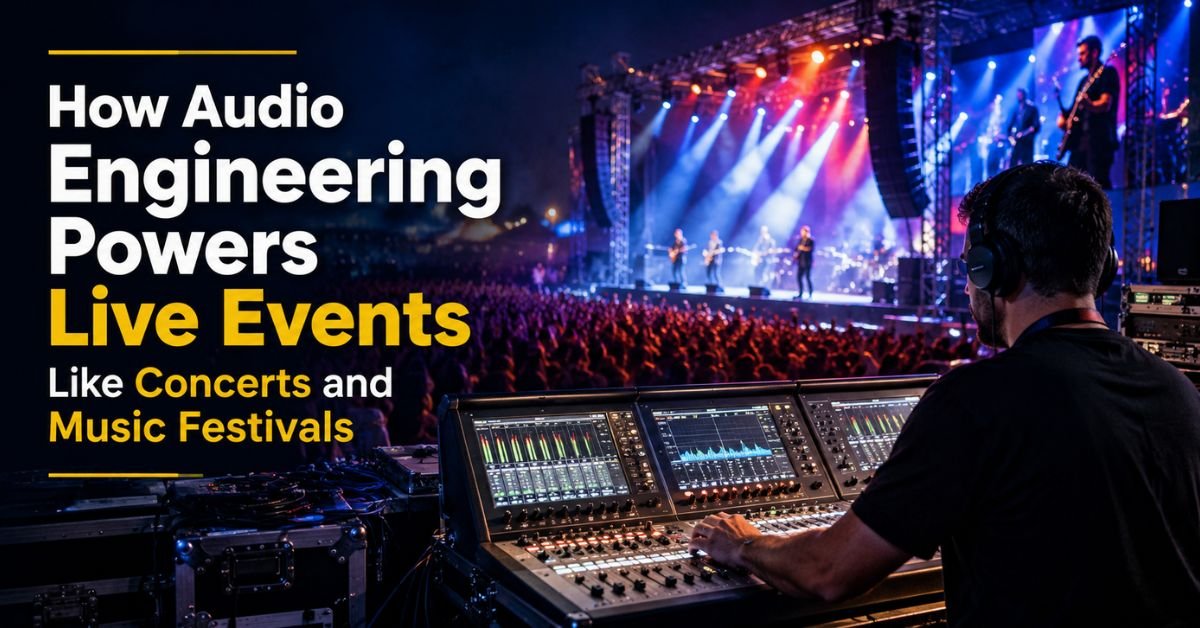

You walk into a concert, and before you even register the lights or the crowd, the sound hits you first. That wall of clarity. Bass you feel more than hear. Vocals cutting clean through thousands of people singing along, somehow still on top of the mix. None of that just happens. There’s a team of audio engineers behind it, making calls in real time that most people in the crowd never think twice about. If you’re looking into music production courses in India, live sound is one of those areas worth paying attention to, since it mixes technical know how with the kind of quick thinking you can only really learn on the job.
In this blog, we will take a closer look at how audio engineering actually powers the live events we all show up for.
Setting the Foundation Before the Show Begins
The work starts well before anyone opens the gates. Every venue behaves differently. An indoor arena reflects sound in ways an open field never will, so engineers spend time walking the space, testing how sound bounces, and figuring out where it travels well and where it turns into mush.
That prep work also decides what gear gets used and how it’s arranged. A small club show and a festival with fifty thousand people need completely different setups. Get this stage wrong, and it’s not a minor issue either. It can ruin the show for entire sections of the crowd standing in the wrong spot.
The Role of the Front of House Engineer
Once the show starts, the front of house engineer is basically running the whole audio experience from a desk somewhere out in the crowd. They’re balancing vocals, instruments, backing tracks, all of it, live, as the performance unfolds. A guitar solo needs to sit higher in the mix for a second. Wind catches a vocalist’s mic. The crowd gets loud and suddenly everything needs rebalancing.
There’s no undo button in this job. In a studio, you fix mistakes later. Here, you don’t get that luxury. One bad move on the fader and the whole room hears it.
Monitor Engineering: Sound for the Performers
While the crowd hears the front of house mix, the people on stage are listening to something completely different, their own monitor mix. A drummer needs the click track loud and clear. A singer needs to hear themselves over the band just to stay in pitch. These requests get specific fast, and getting them wrong can throw a performer off even when the audience mix sounds flawless.
This is why monitor engineers spend real time with artists before a show even starts. Some performers want in ear monitors for that isolated, controlled sound. Others still swear by stage wedges. Either way, this part of the job shapes how confident a performer feels once they’re actually up there.
Managing Unpredictability in Real Time
No amount of rehearsal fully prepares anyone for what a live event throws at them. Weather shifts the acoustics outdoors. Gear fails at the worst possible moment. A performer steps away from their mic mid line without warning. Engineers have to catch these moments and adjust without the audience even noticing something went wrong.
This is really where training turns into instinct. Sensing that a mix feels slightly off, knowing exactly which knob to touch and by how much, that’s not something you pick up from a textbook. It comes from doing this over and over, under real pressure.
A few things engineers are constantly managing during a live set:
Balancing levels across vocals and instruments as the performance shifts
Fixing equipment problems on the fly, without stopping the show
Adjusting for outdoor conditions or unexpected crowd size
Staying in sync with lighting and stage cues throughout
Why This Skill Set Matters More Than Ever
Live events have genuinely exploded across India in recent years. Festivals, big concerts, large scale shows, they’re all a much bigger part of how people experience music now. That shift has created real demand for engineers who can handle both the technical grind and the creative instinct this work needs. It’s not just about knowing your gear. It’s about understanding music itself, how space changes sound, and how an audience two hundred metres back hears things differently than someone standing at the barricade.
At TASE, we’ve spent years teaching students what actually happens behind a live console, because no amount of theory prepares you for a festival crowd of thousands or a monitor mix that needs fixing thirty seconds before showtime. Our training leans heavily on hands on practice and real exposure to the industry, so our students leave genuinely ready to work, not just familiar with the idea of it. If a career in this field is something you’re serious about, our audio engineering courses in India are built to take you from the basics all the way to the kind of practical confidence this work demands. Come learn it the way it’s always been taught best, by actually doing it.